
NewsON - Local News & Weather
Syncbak, Inc.News & Magazines
3.31.36K Reviews
- Version
- 4.2.2
- Installs
- 100.00K
- Age Rating
- Everyone 10+
Screenshots
Our Review of NewsON - Local News & Weather
 Analysis by Appyee
I approached NewsON as a practical way to keep up with local television news rather than as a replacement for every news source on my phone. That distinction matters. The app sits in the News & Magazines category, is free to use, and comes from Syncbak, Inc. Its main appeal is straightforward: it brings live local news updates and earlier newscasts together in one place, so I do not have to jump between several station apps when I want a quick look at what is happening nearby.
After spending time with it, I found the experience most useful when I treated it as part of a repeatable routine. I would open it when I wanted a local broadcast in the background, check what was available after missing a scheduled bulletin, or use it as a second source alongside a newspaper app and national coverage. It is not the most polished or universally complete news tool I have used, but it serves a specific purpose well enough for people who prefer local broadcast reporting.
How I use the app for a dependable local-news routine
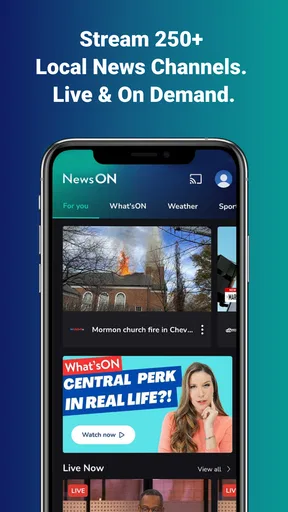
The first thing I would do after installing it is set up my expectations. NewsON is not designed around a long written feed full of articles, opinion pieces, or topic-by-topic research. Its value is closer to having a collection of local newscasts within reach. That makes the opening workflow simple: choose the local coverage that interests me, look at what is live or available to watch, and decide whether I want a current broadcast or an earlier one.
That approach is particularly convenient during a busy morning. If I am getting ready and do not have time to read several articles, a local broadcast can give me a quick sense of traffic, weather, community events, and developing stories. I can then return later when I have more attention. The app works best in that kind of short session, where I want context from a familiar regional newsroom instead of a stream of disconnected headlines.
I also found the previous-newscast side of the experience important. Live programming is useful only when I happen to open the app at the right time, while earlier broadcasts make the service more flexible. If I miss a local bulletin because of work, school, or travel, I can check whether a recent program is available rather than waiting for the next scheduled broadcast. That turns the app from a live-only viewer into something I can fit around my day.
One practical habit is to use it at a fixed point in the day instead of repeatedly checking it without a reason. For example, I might look in during breakfast for a local overview, then return in the evening for a fuller update. This keeps the app from becoming another notification-driven distraction. It also makes the difference between local broadcast coverage and a constantly refreshing social feed more noticeable: I am choosing a viewing session, not simply reacting to every new item.
The audience focus is fairly clear. If you have recently moved, travel often, or want to follow a particular local area while away from home, a centralized local-news app can be more convenient than remembering individual station names. It can also help households where one person wants local television coverage but does not want to subscribe to a broader live-TV package just for news.
There is a trade-off, though. A broadcast is not always the fastest format for a single fact. If I only want to know whether a road is closed or whether a council meeting has been postponed, a station website or a written alert may get to the point faster. NewsON is better when I want the surrounding explanation, the sequence of stories, and the feel of a complete local newscast.
What I check before relying on a broadcast
I do not assume that the first available program is automatically the best choice. Local news can vary considerably between stations, especially when one broadcast emphasizes weather, another focuses on community reporting, and another gives more time to breaking events. I look at the available options and choose based on what I actually need: a broad daily briefing, weather-related coverage, or a follow-up to a story I saw earlier.
That small decision saves time. Instead of starting one program, discovering that it is not relevant, and then opening another, I pause long enough to identify the likely match. It is a simple workflow, but it is one of the more useful habits for an app built around multiple local broadcasts.
I would also avoid treating a single broadcast as the final word during a rapidly changing event. Local television can provide valuable on-the-ground context, but a developing situation may change between broadcasts. I use NewsON for the reporting and explanation, then check a current written source when an exact status matters. This is especially sensible for travel plans, severe weather, public-service changes, or anything where an old segment could be mistaken for a current update.
Settings and phone habits that make a difference
The most important “settings” decision is not a hidden advanced option; it is deciding how the app fits into my attention and data habits. I prefer to open it intentionally rather than leave local news competing with every other alert on my phone. If I am trying to reduce interruptions, I keep my news routine manual and use the app when I have time to watch.
That choice is also useful for people who mainly use mobile data. Video news can be less forgiving than reading a short article, so I would avoid starting a long viewing session when my connection is weak or when I am trying to conserve data. A stable connection makes the experience much more comfortable, particularly when I want to watch a complete newscast instead of a brief clip.
On a tablet or larger phone, the viewing experience feels more natural for longer sessions. On a small screen, the app is still practical for a quick check, but local broadcast graphics, maps, captions, and on-screen details are easier to follow when I am not holding the display too close. I see the app as flexible across devices, but the best setup depends on whether I am watching actively or listening while doing something else.
Another useful habit is to keep the app available for planned viewing rather than assuming it will replace a television schedule. When I know I want a local update at a certain part of the day, I open it then and choose from what is available. This avoids the frustration of expecting every station or every program to be live at the exact moment I happen to check.
NewsON is aimed at users aged Everyone 10+, which fits its general-purpose local-news role. Even so, I would still use normal judgment when watching with younger family members because news broadcasts can cover accidents, crime, disasters, and other serious subjects. The age label is useful context, but it does not mean every segment will suit every child.
Shortcuts that make repeat use faster
The fastest workflow I found was based on repetition: decide which local areas matter, check the live choices first, and move to an earlier newscast when the live options are not useful. I do not spend time browsing aimlessly. I open the app with a question in mind, such as “What is happening locally this morning?” or “Did the evening broadcast cover the event I heard about?”
That question-led approach is more effective than treating the app like an endless content feed. It also helps me decide when to stop. Once I have watched the relevant segment or gathered the local overview I needed, I close the app and move on. For a news service, that is a genuine advantage: the goal is to become informed, not to keep scrolling indefinitely.
When I miss a live broadcast, I switch quickly to earlier coverage instead of repeatedly refreshing the live area. That is one of the clearest practical uses of the service. The app becomes more dependable when I accept that “live” and “available to watch” are different things and use each mode for its proper purpose.
I also compare the broadcast with my usual written sources instead of choosing one format for everything. NewsON gives me local presentation and fuller spoken context. A newspaper app is usually better for scanning many stories, saving an article, or returning to a specific paragraph. A station’s own website may be better for a short text update. Combining them gives me speed and depth without forcing one app to do every job.
For commuters, the best use may be before leaving rather than during travel. I can check a local broadcast at home, then use a dedicated traffic or weather source for immediate route decisions. Watching video while moving is distracting and not a sensible substitute for a focused travel update. This is an example of where the app is useful in a routine but not necessarily at every stage of that routine.
People who follow more than one area can also use a simple rotation: check the most important location first, then look at another only when there is a specific reason. Without that discipline, a broad collection of local coverage can turn a quick update into a long viewing session. The app offers convenience, but the user still needs to decide which coverage deserves attention.
Where the experience shows its limits
My biggest reservation is that local coverage is not the same as universal coverage. The usefulness of the app depends heavily on whether the places and broadcasts I care about are represented when I need them. Someone looking for one particular local station should not assume that a centralized service will always be as complete or as immediate as that station’s own app or website.
There is also a timing limitation. A live-news service is naturally tied to broadcast availability, while earlier programs help but do not erase the difference between watching now and watching later. If I need minute-by-minute updates, I would choose a dedicated breaking-news feed, official emergency communication, or a station’s current text coverage instead.
The video format can be slower than written news when I am searching for one detail. I cannot skim a spoken report as quickly as I can scan a headline list, and I may need to wait for a story to appear in the sequence of a broadcast. That is not a flaw in local television itself, but it is an important trade-off for anyone accustomed to article-based news apps.
The average rating is 3.3 from around 3,000 ratings, with roughly 1,400 written reviews, and that mixed reception feels understandable to me. The idea is useful, but the experience can depend on coverage availability, viewing conditions, and whether a person prefers video or text. I would not judge it solely by the concept; I would judge it by whether the local broadcasts I need are actually convenient to access.
The app has passed 100,000 installs, which suggests it has found a real audience without making it a universal household service. It is a focused tool rather than a complete news ecosystem. I would recommend trying it if local television is central to how you follow events, but I would keep another source nearby for written updates, official information, and broader national or international reporting.
Its current version is 4.2.2, and it supports devices running Android 7.0 or later. That makes compatibility worth checking before installation, particularly on an older phone or tablet. The technical requirement is not something I would overlook if I were setting it up on a spare device for a family member.
Who should use it, and who should choose something else
I think NewsON is a good fit for someone who wants local broadcast news without opening several station-specific services. It is also useful for people who miss scheduled newscasts but still want to watch a recent program, and for viewers who prefer hearing a newsroom explain a story rather than reading a short headline.
I would be more cautious recommending it to someone who wants a personalized written feed, instant alerts, deep article archives, or detailed international coverage. A general news reader, a newspaper application, or a station’s own digital service may be better for those needs. The same is true for users who want to search directly for one narrow fact and move on in seconds.
It is also not my first choice as the only source during an emergency. A broadcast can help explain what is happening, but official local instructions and timely alerts should take priority when safety decisions are involved. I use the app for context and follow-up, not as a substitute for emergency communication.
The free price makes experimenting easy, especially if I already know I enjoy local television news. I can test whether the available coverage matches my area without committing to a paid television bundle. That does not guarantee the app will become part of my daily routine, but the low barrier makes it reasonable to try rather than dismiss it based on assumptions.
My verdict after building a repeatable routine
NewsON works best when I use it deliberately: open it for a local overview, choose live coverage when the timing suits me, switch to an earlier newscast when necessary, and confirm urgent details through a current written or official source. That workflow lets the app play to its strengths without asking it to behave like a newspaper, emergency-alert system, or national news aggregator.
I appreciate the convenience of bringing local broadcasts into one place, particularly on days when I miss television schedules or want regional context while away from home. I also like that the service can fit into short sessions rather than demanding constant attention. The main weaknesses are equally clear: coverage and timing may not match every user’s needs, and video is not the fastest way to retrieve one specific fact.
My recommendation is therefore fairly specific. If you want local TV news and are comfortable combining it with other sources, I think the free app is worth trying. If you mainly read news, need instant written updates, or expect complete coverage of one station at all times, I would choose a more specialized alternative. For the right viewer, the best habit is to use it as a local broadcast layer, not as your entire news system.
In my experience, that honest positioning makes the app much more useful. I would keep it installed for local newscasts, missed broadcasts, and regional context, while relying on other tools for searchable articles and urgent alerts. Used that way, NewsON is a focused and practical companion for staying connected to local television news.
Verdict
Strengths of NewsON - Local News & Weather
- Free access to live local TV news from many U.S. markets.
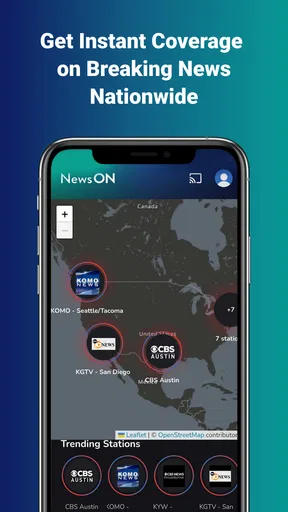
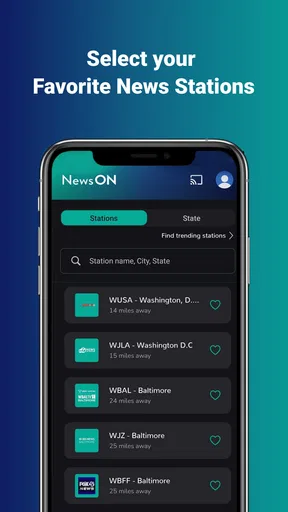
- Easy station browsing with coverage organized by city and region.
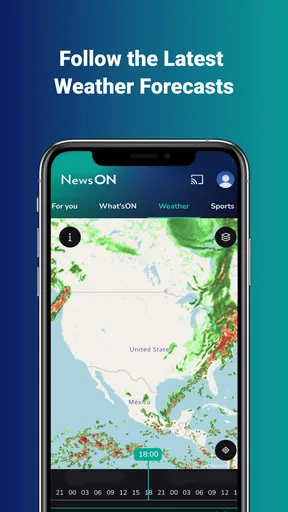
- Includes local weather updates alongside news broadcasts.
- Useful for keeping up with hometown news while traveling.
- Supports on-demand viewing when you cannot watch a live newscast.
Limitations of NewsON - Local News & Weather
- Coverage is limited mainly to participating U.S. local stations.
- Some markets may have fewer channels or unavailable live streams.
- Video quality and playback can vary with your internet connection.
- Advertising may interrupt broadcasts and reduce viewing convenience.
- The app may require location access to recommend nearby news stations.
Similar Picks in This Category
View All
Google News - Daily Headlines
Google LLC4.0

X
X Corp.4.8

Flipboard:Your Social Magazine
Flipboard3.4

Opera News: breaking & local
Opera4.5

Hindi News by Dainik Bhaskar
Dainik Bhaskar Group4.0

Way2News Daily News App
Way2News ( Formerly Way2SMS )4.6
Frequently Asked Questions
What is NewsON - Local News & Weather?
NewsON is a news and weather application designed to help users watch local television news from participating stations across the United States. After installing it, you can browse available local broadcasts, choose a market or station, and access live or recently aired coverage. Availability and programming depend on the stations supported in your location.
Can I watch local news live with NewsON?
Yes, NewsON may provide live streams from participating local news stations, although the exact channels and broadcast times vary by market. In addition to live coverage, some stations offer recently aired newscasts or on-demand reports. Before downloading, remember that not every city or station is necessarily supported, so check the available locations within the app.
Does NewsON provide local weather information?
NewsON focuses primarily on local news broadcasts, many of which include weather forecasts, severe-weather updates, and traffic information. The weather content you see generally comes from the selected local station rather than from a single nationwide forecast service. Coverage can differ by market, so users should confirm whether their preferred local station is available.
Is NewsON free to download and use?
NewsON is generally available as a free download, allowing users to explore supported local news content without purchasing a traditional television subscription. However, the service may be supported by advertising, and data charges from your mobile provider can still apply when streaming over cellular networks. Features and access may also vary by region or station.
What devices and internet connection are required for NewsON?
NewsON is intended for compatible Android and iOS smartphones or tablets, with availability depending on the current requirements of each app store. Because the service streams video, a stable Wi-Fi or mobile-data connection is recommended for smoother playback. Using Wi-Fi is usually preferable for extended viewing, since live news can consume a significant amount of data.
